monk
monkMonk knows the live state of everything - your application and your infrastructure, at every moment.
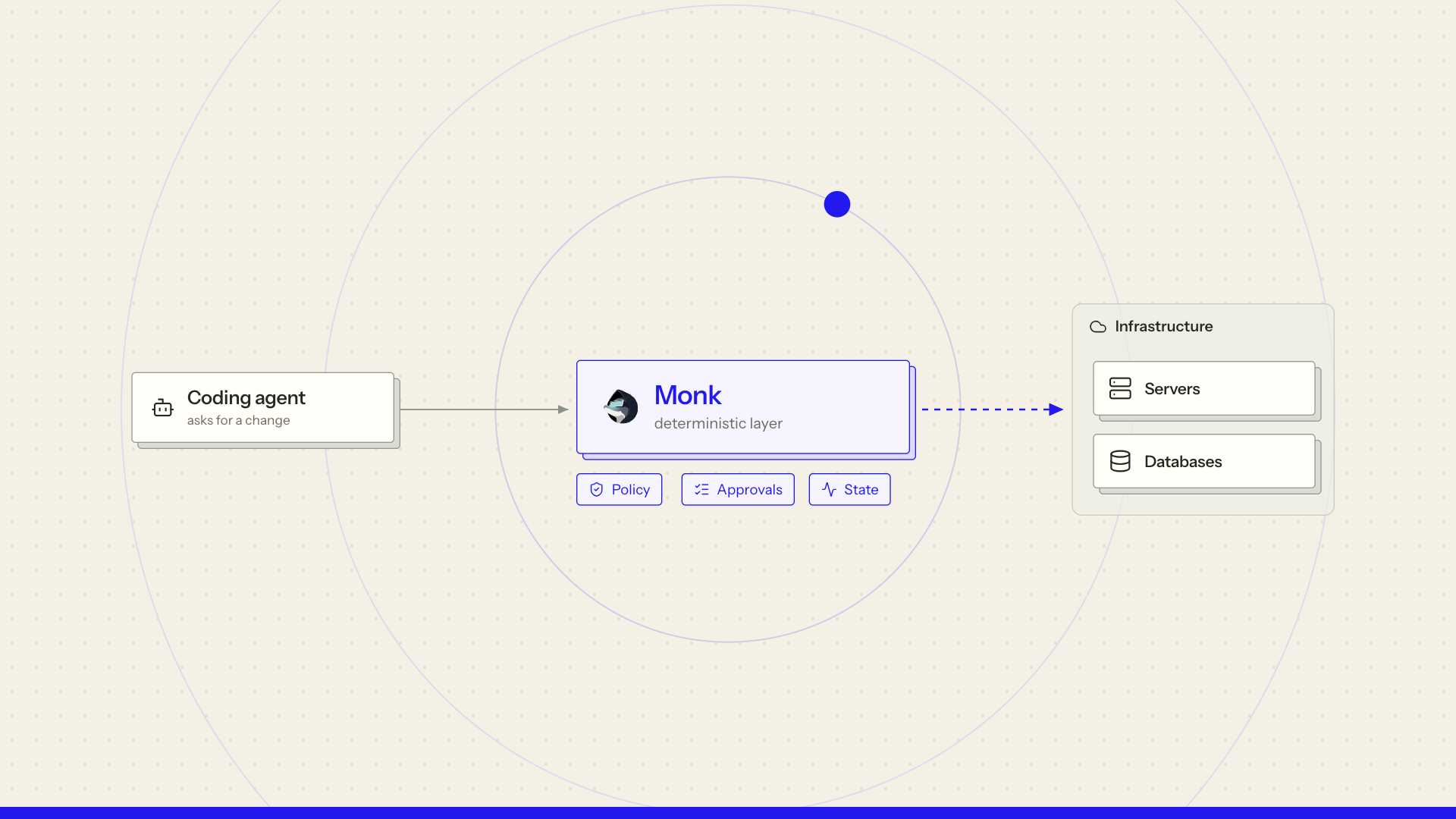
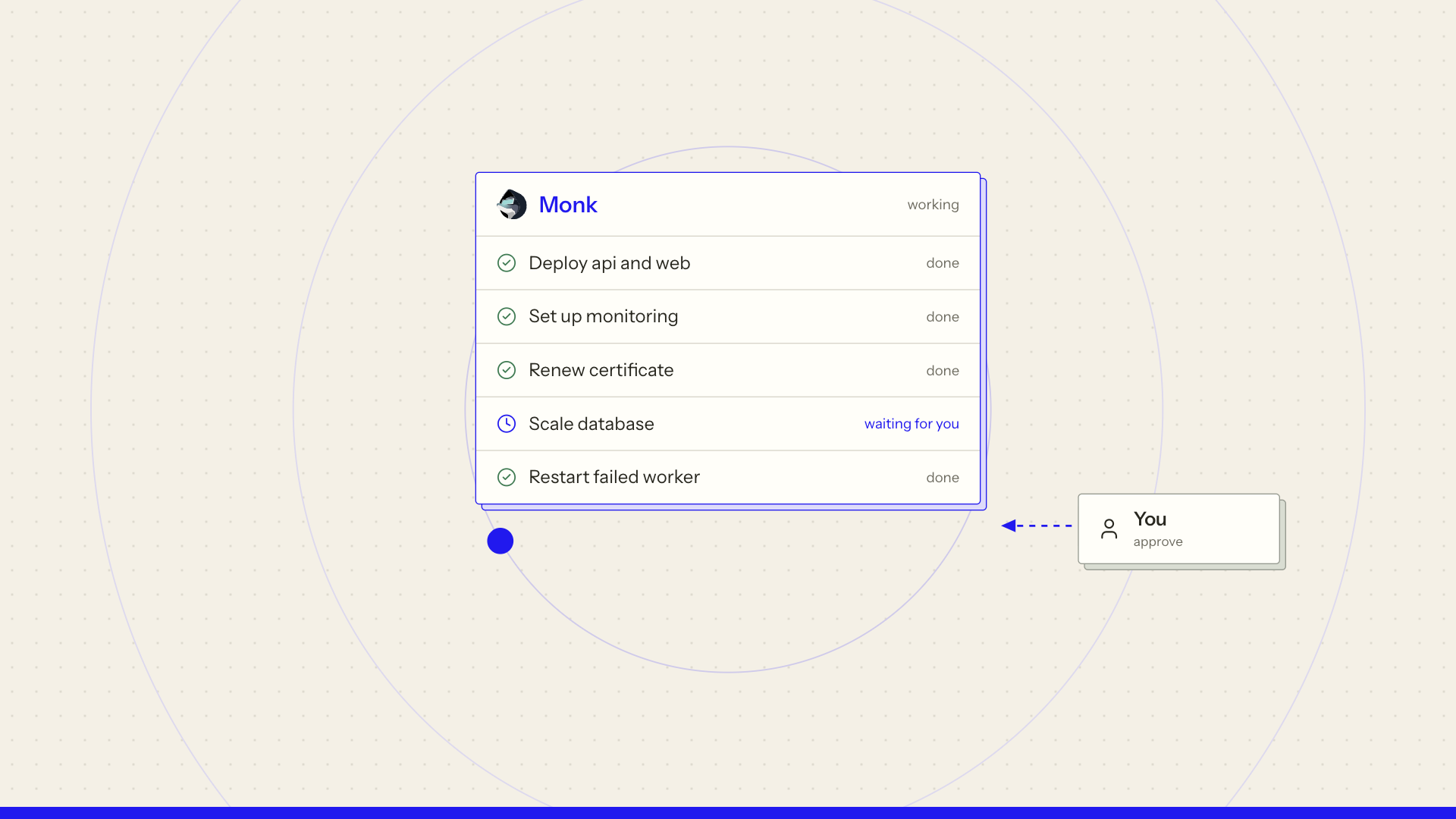
Part 3 of 5: a gate is only as good as what it knows. "Don't restart the production database" means nothing unless the layer knows which database is production - and that knowledge is state.
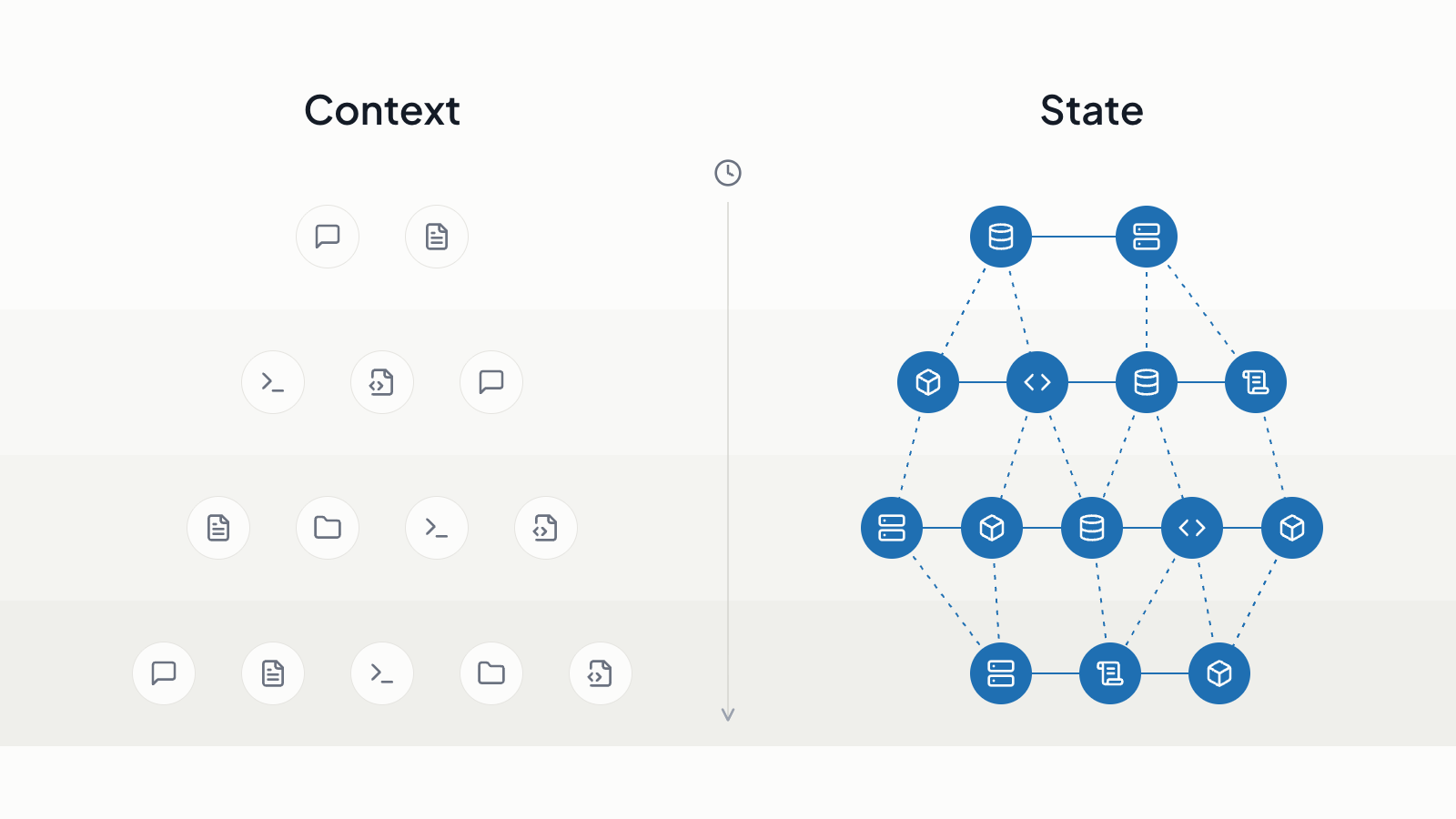
State is not context
State is the system's durable record of what's actually deployed: where, from which commit, wired to what, holding which secrets. Coding agents don't have it. What they have is context - the conversation, the open files, the last few tool calls - rich while the session is alive, and gone the moment it ends. Context without state is amnesia: an agent that can act, but can't remember what it acted on.
The system that never sits still
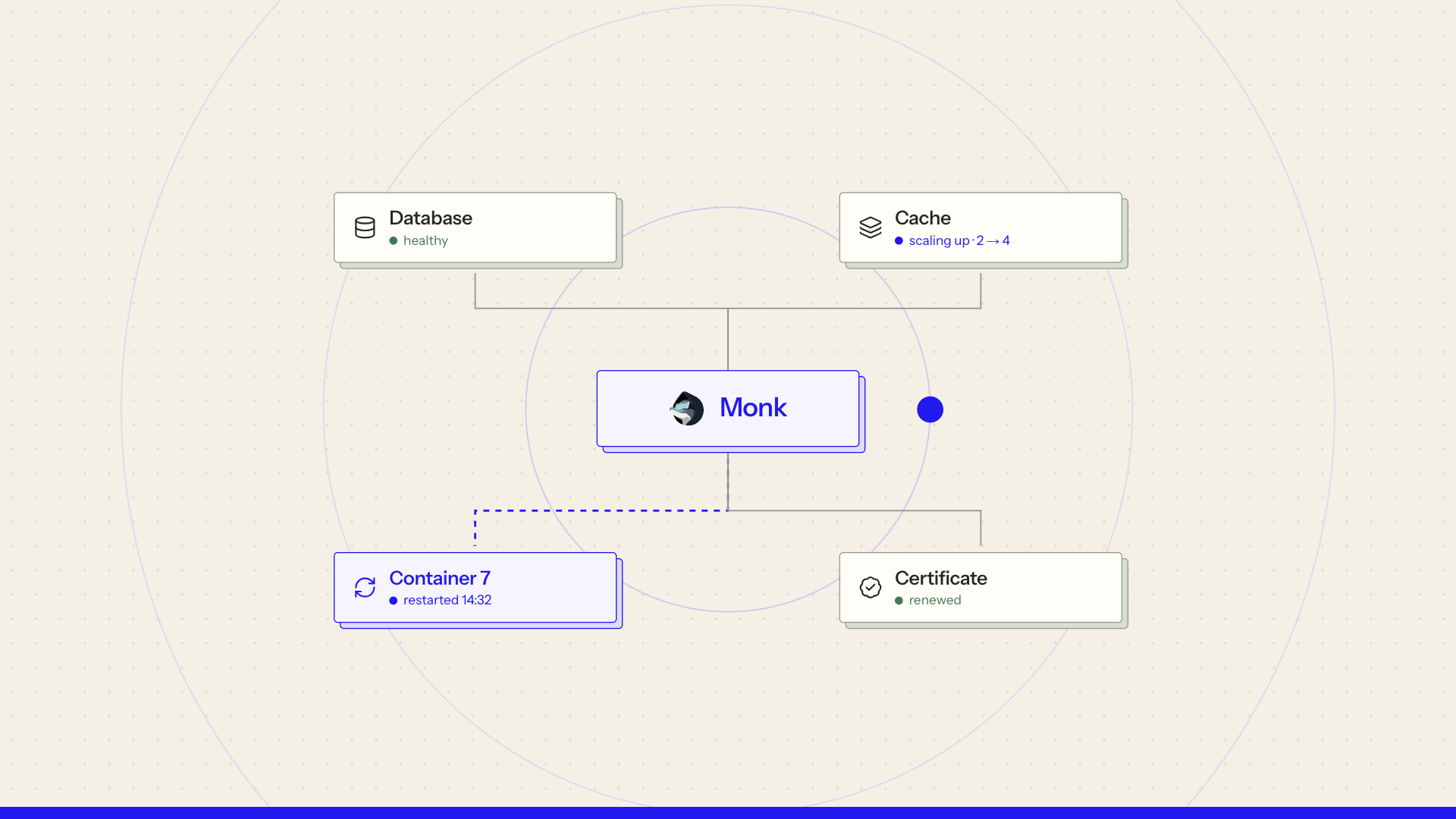
For a one-off code change, that amnesia is survivable - the code sits still until you touch it again. For a running system, it's dangerous, because the system never sits still. It changes when no one is typing: services scale up and down, containers die and reschedule, certificates expire, traffic shifts, a deploy half-lands. Any snapshot goes stale almost as soon as it's written, and an agent working from a stale picture doesn't just forget - it acts, confidently, on a system that has already changed underneath it.
A continuous picture, not a snapshot
That's why state has to be everything: not just your infrastructure but your application, and not a snapshot but a continuous, runtime picture - what's deployed, from which commit, whether it's healthy, what it's wired to, what changed a minute ago. Monk holds exactly that, as a live graph maintained by the same layer that guards your infrastructure. It's also why the AI can act autonomously at all: the layer can safely say yes, because it always knows the true state of what it's saying yes to.
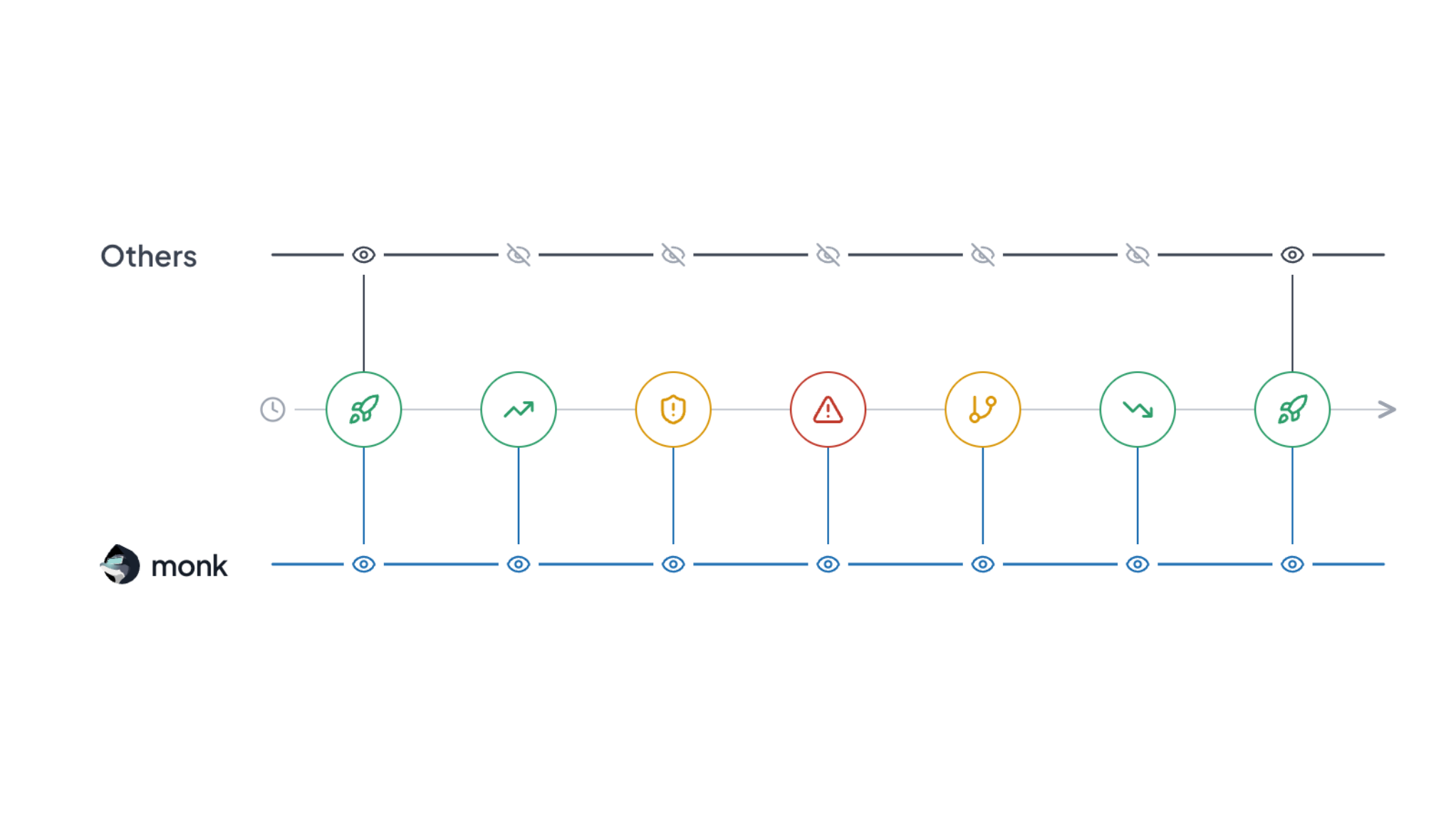
That graph is the heart of Monk - an always-current picture of every service it runs: where it's deployed, whether it's healthy, what it costs, every change over time. It stays accurate for as long as your system runs. That's what lets an agent stand up a multi-service application, with the networking and encryption wired automatically, and then keep operating it instead of just deploying it once and walking away.
This is what turns a tool that deploys into a system that operates. Because Monk always knows the current state of everything, it can undo a bad deployment cleanly, renew a certificate before it expires (the kind of silent failure that takes a site down at 2 a.m.), notice when reality stops matching the plan, trace an outage to its actual cause instead of its symptom, and add capacity the moment traffic climbs. None of these are features bolted on the side - they're all just things you can do once you never lose track of what you built. Stay tuned for Part 4/5. 🐬
Keep reading