monk
monkMonk is a DevOps agent that does the work for you.
Part 1 of 5: what it does, why it doesn't stop at deploy, and how it stays autonomous between your approvals.
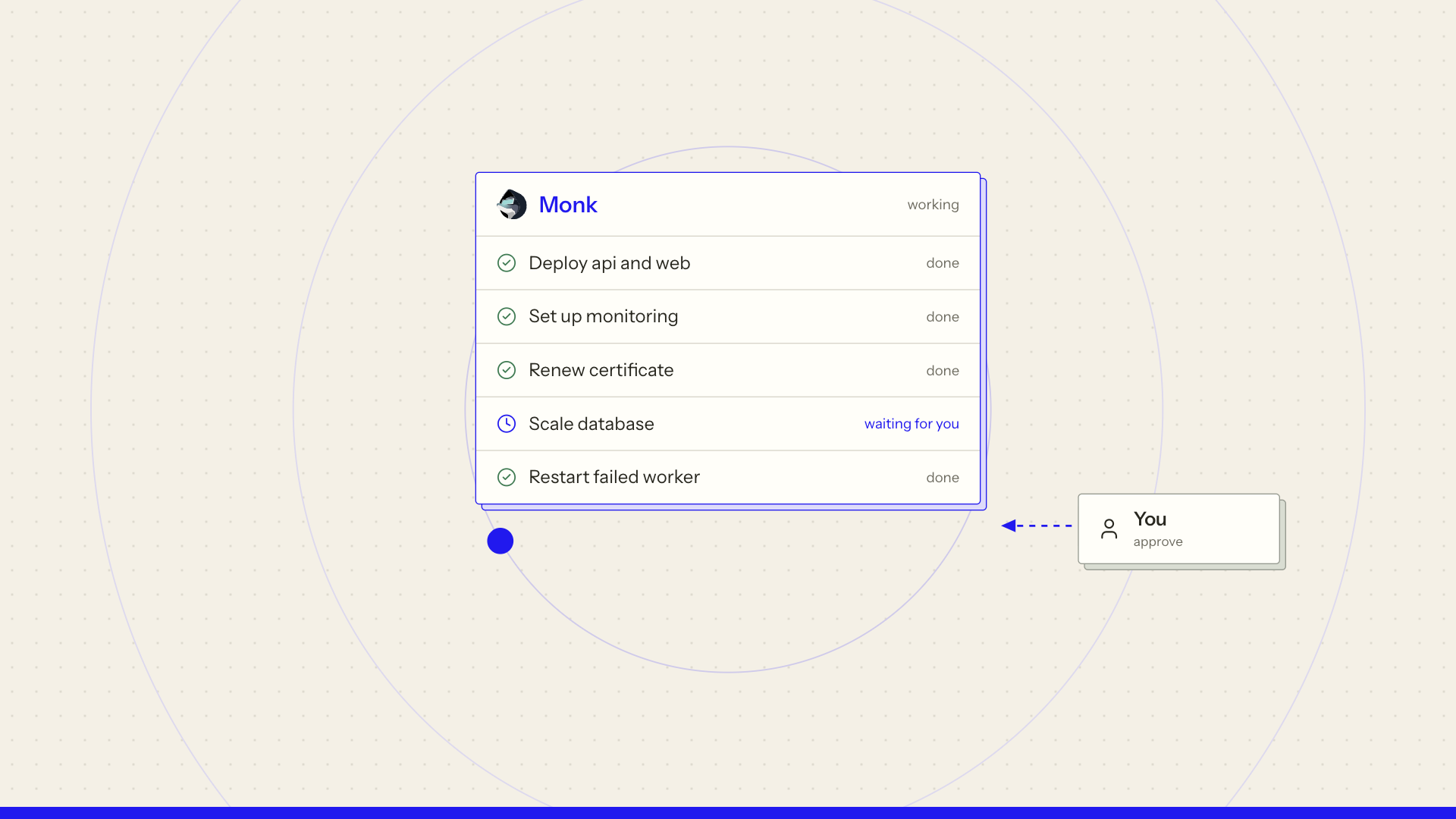
Install it as a plugin in your coding agent and point it at your code. No commands to memorize, no runbooks to follow - you just ask.

Monk does the rest. And it does a lot indeed.
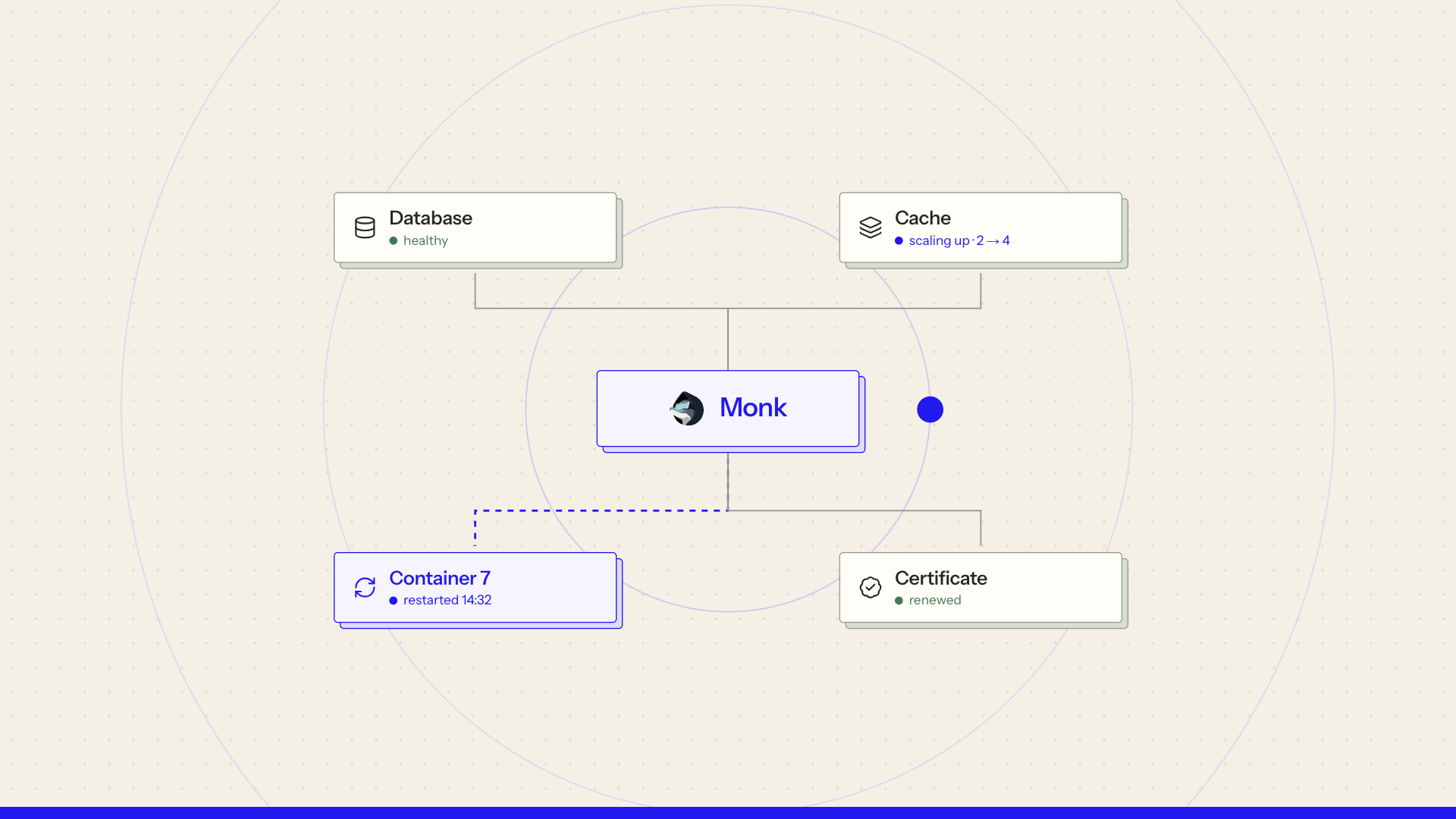
Monk reads the app, works out what it needs - the services, the dependencies, how they fit together - then builds the whole thing: the database, the caches, the containers, the traffic routing, the TLS certificates, the secrets, the deploy pipeline, the monitoring, the scaling, the backups. You don't hand it a spec; it derives one from your code and executes it.
And it doesn't stop at deploy. Deploying is day one; the real job is day two and day two hundred - keeping the thing alive, healthy, and current long after the initial push. Monk keeps operating the system for as long as it runs, instead of standing it up and walking away.
Monk works autonomously between your approvals
This is what sets it apart from agents with tools and agentic workflows. An agent with tools works one prompt at a time and stops when the conversation ends. A workflow runs unattended, but only along paths someone scripted in advance - and the scripts themselves become one more thing to maintain.
Instead, Monk keeps a live picture of your entire application, looks things up, debugs, and works through problems nobody scripted, until the system runs the way you intended. And it runs continuously, catching drift and failures whether or not anyone is asking. That's what autonomy means here: the operations loop stays closed without a human driving it.
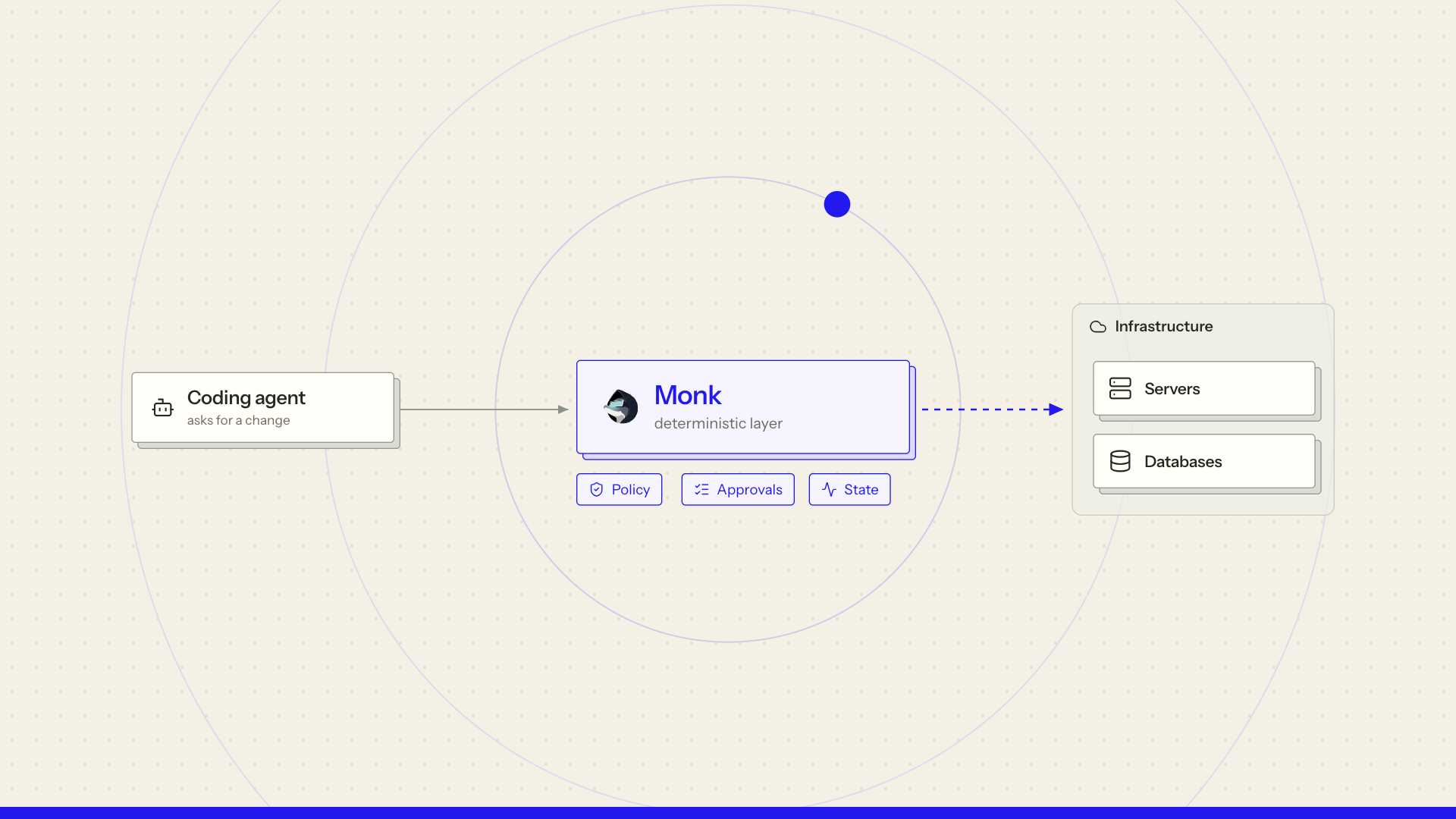
And you stay in control the whole time. You talk to your coding agent, but your coding agent never touches your infrastructure - Monk orchestrates everything underneath it, and it can't touch anything outside boundaries you set.
How is it possible that you can trust Monk not to delete your database? Because it's not only AI, and that's the point. Read part 2 of 5: Monk isn't just an AI - and that's the point. 🐬
Keep reading